

NIGERIA FIRST: A CASE FOR PROTECTING NATIONAL SOVEREIGNTY AND DIGNITY
NIGERIA FIRST: A CASE FOR PROTECTING NATIONAL SOVEREIGNTY AND DIGNITY

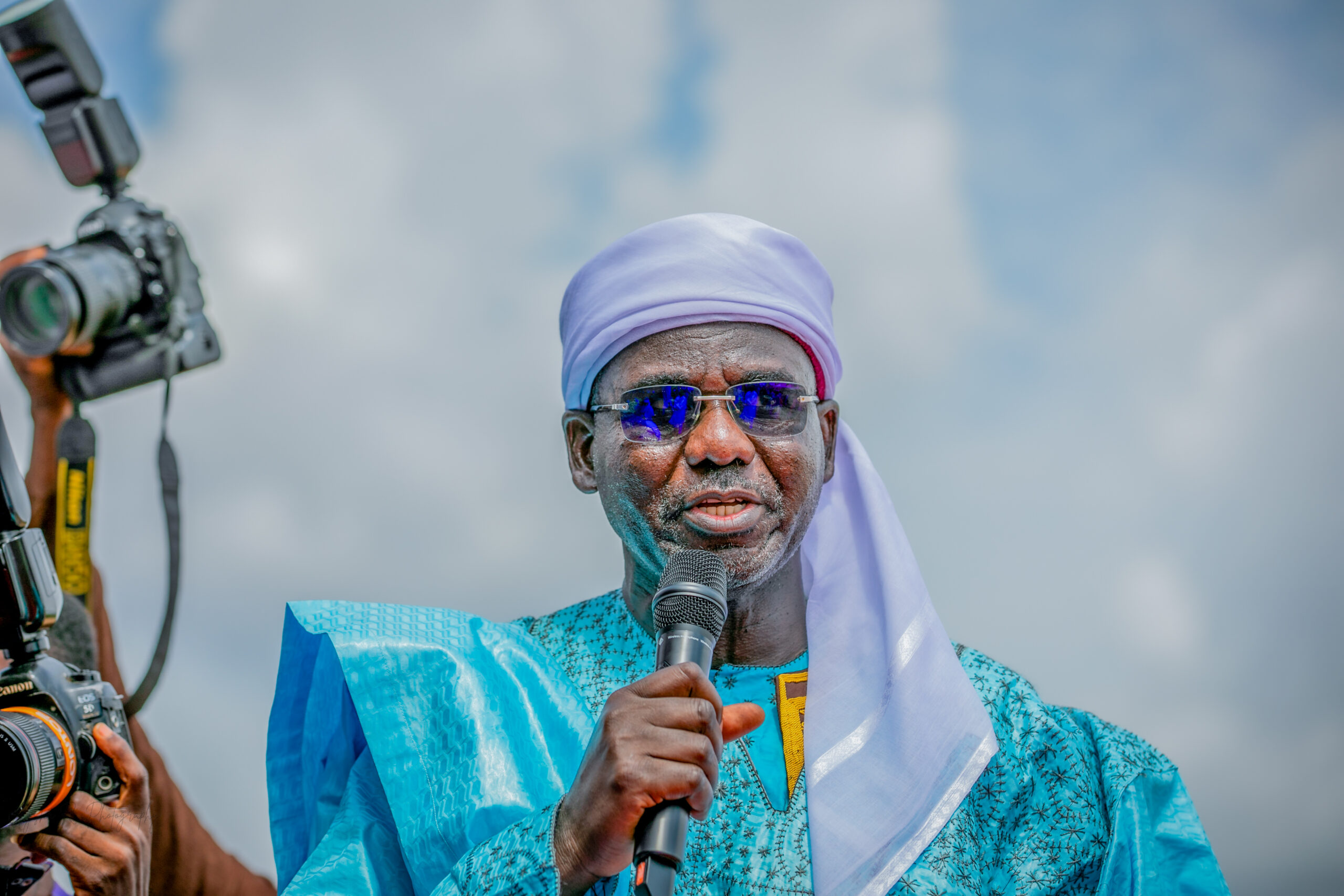
NIGERIA FIRST: A CASE FOR PROTECTING NATIONAL SOVEREIGNTY AND DIGNITY
A Patriotic and Non-Partisan Perspective
Introduction
In the coming weeks, a foreign court will decide whether to release documents that could forever alter how the world perceives Nigeria and its people. While the media narrative has focused on President Bola Tinubu’s past, the true stakes extend far beyond one man. This is not merely about Bola Tinubu—it is about 250 million Nigerians whose national pride, economic prospects, and global standing hang in the balance.
The United States District Court for the District of Columbia has given President Tinubu, the FBI, and the Department of Justice until August 28, 2026, to oppose the release of documents allegedly linking Nigeria’s leader to drug-trafficking investigations from over three decades ago. The FBI now admits it holds “highly sensitive” information and has requested private judicial review—a procedural development that, while legally significant, should not dictate Nigeria’s national response.
My viewpoint argues that Nigerians must resist this disclosure in the interest of national pride and image. President Tinubu’s character, whatever its complexities, is inextricably tied to the character of the Nigerian people today. A nation does not throw its leader to the wolves of foreign scrutiny without considering the profound consequences for its collective dignity. A 33-year-old case should not be allowed to destroy the reputation of 250 million people because of one man’s past.
The Nation, Not the Individual, Is on Trial
It is tempting to frame this as a personal legal battle involving President Tinubu. This framing is dangerous and incomplete. When the world reads headlines about a “Nigerian president” linked to drug allegations, they do not separate the man from the nation. They see Nigeria. They see Nigerians. They see a country whose leadership is tainted by scandal.
The global audience does not parse the nuances of civil forfeiture versus criminal investigation. They do not distinguish between past allegations and present governance. They simply absorb the narrative: Nigeria’s president is a man of questionable character. And by extension, Nigeria itself is a nation of questionable character.
This is the reality that must guide Nigeria’s response. We are not protecting Tinubu; we are protecting ourselves. We are protecting the millions of hardworking Nigerians who have never been accused of any wrongdoing but who will bear the stigma of this disclosure. We are protecting the students seeking scholarships abroad, the professionals seeking international opportunities, and the entrepreneurs seeking foreign investment. Their futures are collateral damage in this legal battle.
A 33-Year-Old Case: The Tyranny of Distant History
Let us be clear about what is at stake. The allegations in question relate to events that allegedly occurred approximately 33 years ago. President Tinubu was a young man in his 30s, navigating a different world, a different Nigeria, and a different geopolitical reality. The United States itself was a different nation—one engaged in a “war on drugs” that often swept up individuals in sweeping investigations without due process.
Can any Nigerian honestly claim that they are the same person they were 33 years ago? Can any nation claim that its leaders should be judged exclusively by the actions of their youth rather than by their decades of subsequent service? President Tinubu has governed Lagos State, shaped Nigeria’s political landscape, and led the nation through challenging times. These contributions, spanning decades, should carry more weight than allegations from a distant era.
To destroy a nation’s reputation over a 33-year-old case is not justice; it is disproportionate punishment. It is the application of a foreign legal standard to a Nigerian leader, with Nigerian people bearing the consequences. If the United States cannot manage its own internal drug crises, it has no moral authority to drag Nigeria’s leader through the mud over allegations that, even if true, occurred in a different century.
National Pride and Image: The Intangible Assets We Cannot Afford to Lose
National pride is not a luxury; it is an essential component of a nation’s psychological health. Nigerians have fought for decades to shed negative stereotypes—to be seen as innovators, entrepreneurs, artists, and global contributors. We have built a diaspora that excels in medicine, technology, academia, and the arts. We have produced Nobel laureates, world-class athletes, and cultural icons who have elevated Nigeria’s standing.
All of this progress is threatened by the release of these documents. The international media will not present nuanced coverage of Nigeria’s achievements; they will run sensational headlines about a “drug trafficker” in the presidency. Social media will amplify the narrative, reducing 250 million people to a single, damaging story.
This is not hypothetical. We have seen how international media treats African leaders. Once a narrative takes hold, it becomes nearly impossible to dislodge. No amount of economic growth, cultural achievement, or diplomatic success can fully overcome the stigma of having a president whose past is exposed in such damaging terms.
The Danger of Foreign Interference in Nigerian Sovereignty
The United States court is exercising jurisdiction over documents involving a foreign leader. This raises profound questions about sovereignty and the limits of extraterritorial legal action. Does the United States have the right to determine the reputation of Nigeria’s head of state? Should a foreign court be the arbiter of character for a man elected by millions of Nigerians?
If the court proceeds with disclosure, it sets a dangerous precedence. Future American courts may feel empowered to investigate and expose the past of any foreign leader they choose. Which nation will be next? What leader will be subjected to this kind of public humiliation? The principle at stake is not about Tinubu; it is about the sovereignty of all nations, particularly those in the Global South, to determine their own leadership without foreign interference.
Nigerians must resist this not as a defence of Tinubu but as a defence of Nigerian sovereignty. We did not elect an American court to vet our leaders. We did not ask the FBI to determine the character of our president. We have our own processes, our own institutions, and our own standards. If Nigerians have concerns about their leader, those concerns should be addressed through Nigerian institutions—not through foreign courts acting on behalf of foreign interests.
The Economic Cost: Why Nigerians Will Pay the Price
The economic implications of this disclosure are staggering. Nigeria is already facing significant economic challenges—inflation, unemployment, currency instability, and infrastructure deficits. The last thing the nation needs is a crisis of confidence that scares away foreign investment.
Consider the following:
Foreign Direct Investment: International investors seek stable, predictable environments. A president embroiled in drug allegations creates uncertainty. Investment dollars will flow elsewhere.
International Loans and Aid: Development partners and financial institutions may reconsider their engagement with Nigeria if the presidency is perceived as compromised.
Diaspora Remittances: Nigerians abroad send billions of dollars home annually. If the nation’s image is damaged, some may reconsider their engagement, reducing critical inflows of foreign currency.
Tourism and Hospitality: Nigeria is working to develop its tourism sector. A scandal of this magnitude will undo years of progress.
Business Reputation: Nigerian businesses operating internationally may face increased scrutiny, reputational damage, and even sanctions or compliance challenges.
These are not abstract concerns; they are concrete threats to the livelihoods of everyday Nigerians. The 250 million people who will bear these costs had nothing to do with events from 33 years ago. They did not vote for this legal battle. Yet they will pay the price.
Leadership and Collective Responsibility
There is a Nigerian proverb: “When the head is sick, the whole body suffers.” This captures the relationship between a leader and the people. President Tinubu is not merely an individual; he is the embodiment of Nigeria’s collective aspirations, struggles, and identity. To expose him to public humiliation is to expose Nigeria itself.
This does not mean that leaders should be immune from accountability. It means that accountability must be pursued in ways that respect the dignity of the office and the nation. A foreign court, operating under foreign laws and foreign priorities, is not the appropriate venue for evaluating Nigeria’s leader.
Nigerians must also consider the timing. President Tinubu is preparing to contest the 2027 presidential election under the All Progressives Congress banner. The release of these documents, coming just months before the election, would be a devastating interference in Nigeria’s democratic process. It would give foreign actors an unprecedented influence over the outcome of Nigerian elections. The timing cannot be a coincidence.
The Character of Leadership: More Than a Single Chapter
It is essential to evaluate President Tinubu’s entire life and career, not a single chapter from decades ago. Since his return to Nigeria, he has:
Served as Governor of Lagos State (1999–2007), implementing progressive reforms that transformed the state into Nigeria’s economic powerhouse.
Mentored a generation of political leaders who continue to shape Nigeria’s governance.
Played a pivotal role in Nigeria’s democratic consolidation, supporting transitions and institutional development.
Championed economic policies aimed at diversifying Nigeria’s economy away from oil dependence.
Navigated Nigeria through complex political challenges with a focus on national unity.
These are not the accomplishments of a man defined by a distant past. These are the achievements of a statesman who has contributed meaningfully to Nigeria’s development. Should all of this be erased by allegations from 33 years ago? Should Nigeria’s progress be undone by a foreign court’s decision?
A Call for Nigerian Unity
In times of crisis, nations must choose between fragmentation and unity. This is such a moment. Nigerians must resist the temptation to turn this into a partisan battle. When President Muhammadu Buhari faced health-related questions during his tenure, Nigerians—regardless of political affiliation—largely closed ranks to protect the office’s dignity. The same solidarity is required now.
This is not about defending Tinubu the individual; it is about defending Nigeria. It is about sending a message to the world: We will not allow foreign courts to determine our leaders’ legacies. We will not allow foreign legal proceedings to dictate our national narrative. We will not sacrifice 250 million people on the altar of a 33-year-old case.
Recommendations: Defending Nigeria’s National Interest
The following recommendations offer a path forward that prioritizes Nigeria’s national interest while respecting legal and diplomatic norms:
1. Diplomatic Engagement
The Nigerian government should engage diplomatically with the United States to express concerns about the impact of disclosure on bilateral relations and Nigerian sovereignty. This engagement should emphasize the importance of respecting Nigeria’s democratic processes.
2. Legal Representation
President Tinubu’s legal team should vigorously assert all available legal arguments to prevent disclosure, including arguments related to sovereignty, the age of the allegations, and the national interest.
3. National Solidarity
Political leaders across the spectrum should issue statements emphasizing that this is a matter of national dignity, not partisan advantage. All Nigerians—regardless of political affiliation—should be urged to resist foreign interference.
4. Public Education
The government and civil society should educate Nigerians about the consequences of disclosure, focusing on the economic, diplomatic, and reputational damage that would result.
5. Engagement with the Diaspora
Nigerians abroad should be mobilized to advocate against disclosure, emphasizing the impact on the diaspora community.
6. Preparedness for All Outcomes
Even as we resist disclosure, we must prepare for the possibility that the court may proceed. A national communication strategy should be developed to minimize reputational damage.
7. Strengthening National Institutions
Regardless of the outcome, Nigeria must strengthen its domestic accountability mechanisms to ensure that leaders are vetted through Nigerian institutions, not foreign courts.
Conclusion: Nigeria’s Dignity Is Worth Defending
The release of documents from a 33-year-old case would not merely embarrass President Tinubu; it would damage Nigeria’s national pride, undermine our economic prospects, and interfere with our democratic processes. The 250 million people of Nigeria would be the losers—not because of anything they did, but because of a foreign court’s decision about one man’s past.
Nigerians must resist this disclosure. We must do so not because we blindly support any leader but because we love our nation. We must do so because we refuse to let foreigners define our national identity. We must do so because we understand that the character of a leader is tied to the character of the people, and we refuse to allow a 33-year-old case to tarnish the reputation of generations.
Nigerians must remember: When the world judges our leader, it judges us. When the world questions his character, it questions our judgment. When the world mocks his past, it mocks our present. We cannot allow this to stand. Nigeria’s dignity is worth defending, and we must defend it with every tool at our disposal.
The August 28 deadline is approaching. The world is watching. But Nigeria must act not out of fear, but out of conviction—the conviction that our nation’s pride is not for sale, our dignity is not negotiable, and our future will not be determined by a foreign court’s judgment on a distant past.
A nation’s character is not built on the actions of one man, but on the collective resolve of its people to protect their dignity, their sovereignty, and their future.
“The glory of the nation rests in the character of her men.”
— Herbert Hoover
“…our people’s dignity is priceless.”
— Fidel Castro
His Excellency Amb. Lt. Gen. Tukur Yusufu Buratai, CFR (Rtd.) Former Chief of Army Staff
NIGERIA FIRST: A CASE FOR PROTECTING NATIONAL SOVEREIGNTY AND DIGNITY
