

Alhaji Mai Deribe: The Borno Businessman Whose Extraordinary Wealth Was Matched by His Philanthropy
Alhaji Mai Deribe: The Borno Businessman Whose Extraordinary Wealth Was Matched by His Philanthropy

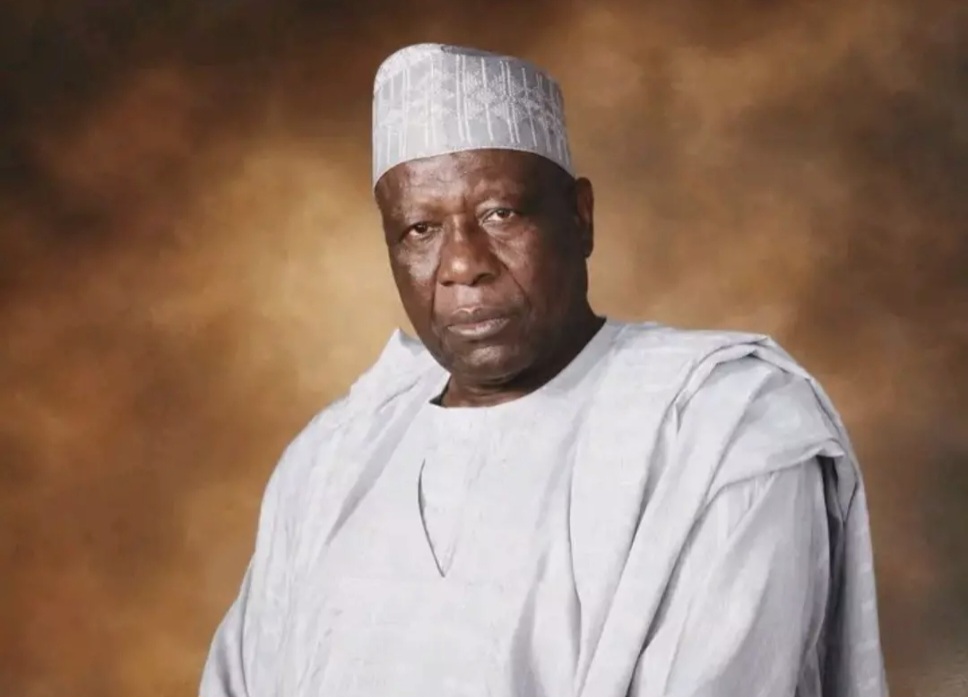
Alhaji Mai Deribe: The Borno Businessman Whose Extraordinary Wealth Was Matched by His Philanthropy
From a celebrated business empire and an extraordinary palace in Maiduguri to hospitals, schools, mosques, boreholes, scholarships and decades of Hajj sponsorship, Alhaji Ahmed Mai Deribe left behind a legacy that went far beyond wealth.
Few Nigerian businessmen of the 1970s and 1980s generated as much fascination as Alhaji Ahmed Mai Deribe, the prominent Borno businessman, entrepreneur and philanthropist whose name became synonymous with extraordinary wealth, ambition and generosity.
Although some popular accounts differ over his exact year of birth, the Biographical Legacy and Research Foundation (BLERF) records him as born in 1926 in Maiduguri, while other biographical accounts give 1924. BLERF records that he was educated in Islamic schools and later built a diverse business empire spanning petroleum, drilling, hospitality, soft drinks and other ventures.
His life belonged to an era when successful northern Nigerian entrepreneurs were building businesses almost entirely without the technological and financial advantages available to today’s generation.
The Man Behind the Name
Mai Deribe established the Mai Deribe Group of Companies, with interests that included Channan Cavendish Petroleum Nigeria Limited, Dalaram Soft Drink Company, Deribe Hotel and Deribe Hospital. His business activities also extended into drilling and other sectors.
His companies became involved in major construction and infrastructure projects in the old Borno region. Historical accounts associate his businesses with projects including the Brigadier Maimalari Barracks, facilities at the University of Maiduguri, Maiduguri General Hospital buildings and public infrastructure.
He also became involved in the search for petroleum resources in the Chad Basin. Accounts of his activities state that in the mid-1980s he committed about $1 million to oil exploration around the Gajiganna and Kukawa areas of Borno.
His approach to business was therefore not limited to immediate commercial returns. He was also interested in developing infrastructure and opening economic opportunities in a region he considered home.
The Palace That Became a Landmark
Perhaps nothing symbolised Mai Deribe’s wealth more dramatically than the famous Deribe Palace, popularly known as the Golden House, in Maiduguri.
The palatial residence became one of the most talked-about private buildings in Nigeria. Reports describe an elaborate structure constructed over many years and decorated with luxurious materials, including extensive marble and gold-coloured finishes.
Some later accounts have claimed construction costs running into tens or even hundreds of millions of dollars and have repeated stories that portions incorporated gold. Those figures and some of the more extravagant descriptions are difficult to independently verify, so they are best treated as contemporary or popular accounts rather than established financial facts.
What is not in doubt is the building’s extraordinary reputation.
It became a symbol of the immense wealth that Mai Deribe accumulated during his most successful years.
A Private Jet Ahead of Its Time
Mai Deribe’s lifestyle extended beyond his palace.
Historical accounts say he owned a Gulfstream private jet, which he sometimes used to transport people he sponsored for the annual Hajj pilgrimage. Reports also describe his international travels and business interests outside Nigeria.
Some online accounts have specifically identified the aircraft as a Gulfstream G550 and claimed he was among only a handful of people worldwide to own one at the time. Those specific claims are widely repeated but are not sufficiently documented in the stronger biographical sources, so they should be treated cautiously.
What is well documented, however, is his long-standing commitment to sponsoring pilgrims to Hajj.
Forty-Four Years of Hajj Sponsorship
One of the most remarkable aspects of Mai Deribe’s philanthropy was his support for Muslims who wanted to perform Hajj.
Multiple accounts state that he sponsored pilgrims for approximately 44 years. On some occasions, he reportedly used his own aircraft to transport pilgrims to Saudi Arabia.
For many ordinary people, the opportunity to perform Hajj would otherwise have remained financially out of reach.
His sponsorship therefore became one of the most enduring parts of his philanthropic legacy.
Seventy-Eight Mosques
Religion was another major focus of his philanthropy.
Accounts attribute the construction of 78 mosques to Mai Deribe, including the Deribe Central Mosque in Old Maiduguri, Bulumkutu Central Mosque, Aminu Deribe Mosque, Doggon Masalanchi in Fezzan Ward, Deribe Hotel Mosque, School Mosque, Fillin Polo Mosque and Airport Mosque, in addition to smaller mosques in other communities.
The Deribe Central Mosque in Old Maiduguri was reportedly commissioned during the administration of General Ibrahim Badamasi Babangida.
His contributions were not restricted to mosque construction. He also supported Arabic and Islamic schools and made substantial donations to existing religious institutions.
On 1 January 1987, for example, he reportedly donated N5 million to the Maiduguri Central Mosque on behalf of his family and that of his late brother, Alhaji Kuli Deribe.
Healthcare and Education
Mai Deribe also invested in social infrastructure.
He established Deribe Hospital along Bulumkutu Road in Maiduguri, which became another expression of his commitment to community development. Historical accounts state that the facility was commissioned by Admiral Augustus Aikhomu, then Chief of General Staff.
His support for education also extended beyond religious schooling.
Reports state that he sponsored indigent students from Borno to study abroad, including students who travelled to England. Some reportedly stayed at his residence in Gloucester while pursuing their studies.
He was also associated with educational and institutional projects in Maiduguri, including support for Government College, Maiduguri.
Bringing Technology to Maiduguri
One lesser-known aspect of his legacy was his interest in modern technology.
After returning from overseas in the early 1980s, Mai Deribe reportedly brought advanced television production equipment and other technology to Nigerian Television Authority (NTA) Maiduguri.
Accounts say the equipment was so advanced that local staff required extensive training before they could fully operate it.
For a city outside Nigeria’s traditional commercial centres at the time, such an investment demonstrated his desire to expose the region to modern technology.
Water for Rural Communities
His philanthropy also reached rural communities.
His Preussag Drilling Company was reportedly responsible for constructing and donating more than 60 boreholes across parts of Borno and Yobe States, providing access to water in communities where reliable water infrastructure was limited.
This was one of the areas where his business resources were converted directly into community infrastructure.
Feeding Communities During Ramadan
Mai Deribe’s generosity was also visible in the communities around his Maiduguri residence.
Historical accounts say that during Ramadan he distributed food to neighbouring households, including a bag of millet to each family every month of Ramadan. Residents of areas including Fezzan and Old Maiduguri were among those who benefited from his largesse.
For families facing hardship, such assistance could make a meaningful difference during the fasting month.
A Philanthropist During Times of Crisis
His generosity became particularly visible during periods of disaster.
During the devastating September 1994 flood, thousands of displaced people reportedly sought refuge at his Maiduguri residence, where they were provided with food and other assistance.
Although Mai Deribe was outside the country at the time, accounts state that he sent substantial financial support to the Borno State Government for relief efforts, including food and shelter materials. Some sources give the amount as N1 million, while others report a much larger figure after later currency conversions or recollections. The precise amount therefore requires caution.
His home effectively became a refuge for people in need.
Influence Beyond Business
Mai Deribe was also involved in politics and maintained relationships with powerful figures of his era.
He served as Treasurer of the National Party of Nigeria (NPN), Borno State branch, during the late 1970s and early 1980s. Historical accounts also describe his connections with political and military leaders of the period.
His influence was not simply the product of money. He was deeply connected to the social, political and economic life of Borno.
The Man Who Wanted Maiduguri to Grow
One of the most interesting aspects of Mai Deribe’s story is his apparent desire to see Maiduguri and the wider region develop.
His investments touched construction, petroleum, drilling, hospitality, healthcare, education, water supply, religious infrastructure and community support.
His business interests were therefore broader than the image of the wealthy man living in an extravagant palace.
He was also an investor who believed that capital could be used to create infrastructure.
A Legacy Larger Than the Palace
Today, much of the public fascination with Mai Deribe centres on the palace, the luxury cars, the private aircraft and the extraordinary wealth associated with his name.
But the other side of his story is equally important.
Behind the famous palace were mosques where people prayed, a hospital where people sought treatment, boreholes that supplied rural communities with water, students who received educational support, pilgrims who travelled to Hajj, families who received food during Ramadan and communities that received assistance during difficult times.
That is the part of his legacy that continues to resonate most strongly in accounts from Borno.
The Final Chapter
Mai Deribe died in 2002 in Mecca, Saudi Arabia, according to several biographical accounts. He was reportedly around 76–78 years old, although published sources disagree on his exact year of birth.
His death brought an end to the life of one of the most colourful businessmen associated with Northern Nigeria’s economic history.
Yet his name did not disappear.
The businesses, buildings, religious institutions and community projects associated with him remain part of the historical memory of Maiduguri and Borno.
A Legacy of Wealth, Vision and Giving
Alhaji Mai Deribe’s life presents a fascinating contrast.
He accumulated extraordinary wealth and lived a lifestyle that few Nigerians of his generation could imagine. Yet he also spent substantial resources on projects that touched ordinary people’s lives.
Seventy-eight mosques. More than 60 boreholes. A hospital. Educational support. Decades of Hajj sponsorship. Food and financial assistance. Business investments and infrastructure projects.
These achievements form a different picture of the man behind the legendary palace.
Mai Deribe was not merely remembered as a wealthy businessman from Maiduguri. He became a symbol of an era when private wealth could command enormous influence — and when one man’s fortune could be directed toward both personal ambition and public generosity.
His story remains part of the rich history of Borno State and Northern Nigeria, where his name continues to evoke memories of extraordinary wealth, bold vision and philanthropy on a remarkable scale.
Alhaji Mai Deribe: The Borno Businessman Whose Extraordinary Wealth Was Matched by His Philanthropy
