

Leadership as Legacy: Buratai’s Enduring Imprint on Nigeria’s Military Tradition
Leadership as Legacy: Buratai’s Enduring Imprint on Nigeria’s Military Tradition
By Jerry Adesewo
As you walk into the Army Headquarters Command Officers’ Mess 1 hall, it is immediately clear this is no ordinary gathering. The atmosphere hums with military precision. Medals glint under the soft lights, brass buttons catch the gleam of soft decors and the deep baritone of officers exchanging greetings fills the room. Seated are the who’s who of Nigeria’s defence establishment — the Chief of Defence Staff, service chiefs, senior officers, and a quiet row of retired generals whose legacies have shaped the nation’s armed forces.
READ ALSO:Abuja Goes to Washington — Hallelujah!
When General Christopher Musa, Nigeria’s Chief of Defence Staff, finally mounts the rostrum, his bearing is firm yet familiar. This is home — a hall full of brothers in uniform, men who have lived, fought, and led under the same flag. But his speech that evening, delivered at the launch of the book “Annotation of Cases on Court Martial”, was not about rank or titles. It was about legacy — and the two men whose shadows of mentorship have guided his rise to the highest office in the Nigerian military hierarchy.
“I am standing here today as the Chief of Defence Staff because of two individuals who made positive impacts in my life,” Gen. Musa began, his tone carrying both reverence and conviction. “My first contact with Gen. Tukur Buratai was when I was a Colonel. During his time as Chief of Army Staff, we used to wonder if he ever slept — even at midnight, if you called or texted, he would respond. He was disciplined, dedicated, and professional. I look up to him every day.”
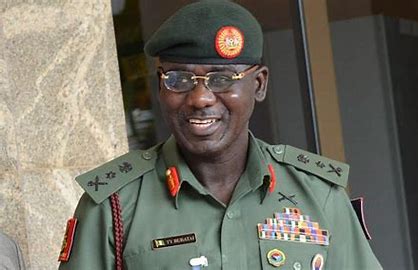
It was a tribute that drew knowing nods from many in the room. For those who served under Lt. Gen. Tukur Yusuf Buratai (rtd), his reputation for tireless commitment was legendary. He led from the front — not only in the battlefield sense but in his insistence on ethical leadership, reforms, and institution building.
Gen. Musa praised Buratai’s professionalism and the seamless continuity he ensured within the Army “His example reminds us that leadership in the military is about service, sacrifice, and mentorship,” Musa affirmed. “I will continue to build on the legacy they left behind.”
A Tradition of Mentorship and Reform
For Buratai, who chaired the event, the words must have resonated deeply. Since leaving office in 2021, his post-service engagements — from diplomacy to academia — have reflected the same disciplined approach that defined his military years. The book launch itself, Annotation of Cases on Court Martial, co-authored by Maj.-Gen. Mahmood Umaru Wambai and Mr. Ali Ibrahim Omachi, was a natural extension of the values Buratai championed: fairness, justice, and professional integrity within the Armed Forces.
He praised the authors for their scholarship and commitment to improving military jurisprudence, describing the publication as “a landmark addition to Nigeria’s legal and military scholarship.” For Buratai, the strength of an army lies not only in its weapons but in its justice system — the fairness with which discipline is administered and integrity preserved.
Buratai’s Legacy: Leadership as a Continuum
The moment captured something profound — a generational baton pass within the Nigerian Army. Buratai’s leadership legacy, rooted in discipline and institutional continuity, has not faded with retirement. It lives on in officers like Musa, who embody his principles in today’s complex defence environment.
Observers often describe Buratai’s tenure as transformative — from retooling counter-insurgency strategies to promoting a culture of innovation and merit-driven appointments within the military. But perhaps his most lasting impact lies in mentorship — the quiet shaping of leaders like Musa, who carry the torch of reform with the same steady hands.
In the Nigerian military tradition, leadership is not an office — it is a continuum. It evolves, transfers, and endures. And in that continuum, figures like Buratai and Yahaya stand as bridges between eras, between warfronts and boardrooms, between doctrine and the lived realities of command.
A Gathering Beyond Ranks
The event itself was more than a book launch; it was a convergence of minds — officers, scholars, jurists, and policymakers — united by a shared commitment to professional excellence. The conversations were animated, but respectful; the atmosphere, dignified yet familiar.
As the applause swelled and the audience rose to their feet, one could sense that something larger than ceremony was unfolding — a reaffirmation of values that hold the military together through the turbulence of national challenges.
In that moment, one could imagine Buratai looking across the hall at the younger generals and officers — a faint smile perhaps crossing his face — knowing that the seeds he planted in discipline, mentorship, and professionalism are taking root in the very institution he once led.
Because in the end, as General Musa’s words made clear, leadership is not remembered by titles, but by the legacies it leaves behind — in men, in systems, and in the spirit of service that outlives them all. And he urged the young military men to take note of these legacies.
Leadership as Legacy: Buratai’s Enduring Imprint on Nigeria’s Military Tradition