

Obadare’s Ordination: Why Apostolic Recognition Matters More Than Paper Records in CAC History

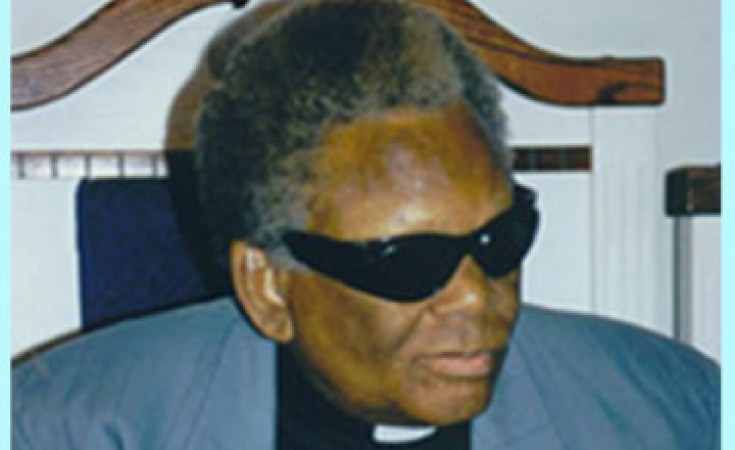
Obadare’s Ordination: Why Apostolic Recognition Matters More Than Paper Records in CAC History
By Professor Ojo Emmanuel Ademola,
The renewed public enquiry into whether Prophet Timothy Oluwole Obadare was formally ordained within the Christ Apostolic Church (CAC) has sparked vigorous debate across ecclesiastical and academic circles. While such an enquiry may be motivated by a genuine desire for historical clarity and institutional healing, the issue must be approached with sound theological reasoning, historical awareness, and a proper understanding of apostolic tradition.
At the heart of the matter lies a fundamental misunderstanding: the attempt to evaluate an apostolic movement using strictly modern bureaucratic standards.
READ ALSO: Strong Clemency Appeal For The Great ABU Zaria
Prophet T.O. Obadare was not an uninitiated entrant into ministry. Before joining CAC in 1958, he was already a fully ordained minister in The Apostolic Church. His ministerial identity, therefore, did not begin within CAC; rather, it was received into CAC. The critical question is not whether he was ordained again within CAC but how his already valid ordination was recognised and affirmed.
Historical accounts consistently confirm that Prophet Obadare’s transition into CAC was neither self-engineered nor administratively negotiated. It followed a divine directive. More importantly, his reception was publicly affirmed by Apostle Joseph Ayo Babalola, the founding apostolic figure of CAC. At a Section B annual meeting in Owo, Apostle Babalola is widely reported to have announced that a prophet named Obadare had joined CAC and that he accepted him as directed by God.
That declaration was not a casual remark; it was an exercise of apostolic authority.
In apostolic Christianity, recognition by a founding spiritual authority carries decisive weight. It is both a spiritual and ecclesiastical act. This understanding is further reinforced by the symbolic gesture attributed to Apostle Babalola—releasing his own chair to Prophet Obadare. Within apostolic tradition, such symbolic acts are not mere courtesies; they represent the transfer or acknowledgment of spiritual authority, much like the biblical account of Elijah passing his mantle to Elisha.
The attempt to reduce this historical reality to the presence or absence of written records risks overlooking how spiritual leadership has been established throughout biblical and church history.
Scripture itself provides multiple precedents. Elisha was never subjected to institutional ordination procedures, yet his legitimacy was unquestioned by virtue of Elijah’s recognition. David was anointed king long before institutional structures aligned with his calling. The Apostle Paul, after his divine encounter, was later received and endorsed by the apostles, not through paperwork but through fellowship and recognition. Timothy’s ministry was confirmed through prophetic utterance and the laying on of hands.
These examples illustrate a consistent pattern: divine calling, when affirmed by recognised authority, establishes legitimacy.
Church history echoes the same principle. Influential figures such as Athanasius, Martin Luther, John Wesley, and William J. Seymour exercised transformative leadership that was not initially dependent on institutional documentation. In many cases, structure followed spirituality—not the other way around.
This is particularly relevant to CAC itself. The church emerged from a prophetic revival movement characterised by divine encounters, spiritual authority, and apostolic affirmation. Apostle Babalola’s own ministry did not originate within rigid administrative frameworks; it was recognised through spiritual evidence and communal acceptance. To now impose retrospective bureaucratic requirements as the highest test of legitimacy risks misrepresenting the very identity of the movement.
This is not to dismiss the value of records or institutional order. Documentation plays an important role in preserving history and ensuring accountability. However, it must be understood as secondary, not foundational. History is first lived, then recorded; it is not created by documentation.
The issue of the missing ministerial register—reported to have been lost during events surrounding the 1985 Certificate of Incorporation—has further intensified the debate. Yet, even in historical methodology, documentation is only one form of evidence. Testimonial accounts and authoritative recognition also carry significant weight.
In the case of Prophet Obadare, both testimonial and apostolic evidence remain compelling. Eyewitness reports of his public acceptance by Apostle Babalola, combined with the enduring spiritual fruits of his ministry, provide a historically credible foundation.
Attempts to apply Old Testament standards, such as the genealogical records referenced in the Book of Ezra, also require careful interpretation. Those provisions governed Levitical priesthood under the Mosaic system. New Testament ministry operates under a different paradigm—one centred on divine calling, spiritual gifting, and communal recognition.
It is therefore important to distinguish between order and bureaucratic rigidity. True ecclesiastical order harmonises divine initiative, apostolic authority, and communal acceptance. All three elements were clearly present in Prophet Obadare’s case.
The enduring legacy of his ministry—marked by holiness, revival impact, and widespread transformation—further affirms the authenticity of his calling. These are not incidental outcomes; they are the fruits by which, according to Scripture, ministry is ultimately known.
The quest for historical understanding must not inadvertently undermine established apostolic truths. While enquiry has its place, it must be guided by appropriate frameworks. To elevate documentation above divine action is to reverse the order evident in both Scripture and church history.
In conclusion, the question of Prophet T.O. Obadare’s legitimacy as a minister within CAC is not unresolved. It is historically, theologically, and apostolically grounded. He was an ordained minister before joining CAC, divinely directed into the movement, publicly received by its founding apostle, and confirmed through a lifetime of spiritual impact.
That, by every meaningful standard, constitutes legitimate ordination
Jesus is Lord.
Professor Ojo Emmanuel Ademola is the General Evangelist, Christ Apostolic Church Nigeria and Overseas