

Thomas Sankara: The President Who Turned Leadership Into a Way of Life
Thomas Sankara: The President Who Turned Leadership Into a Way of Life

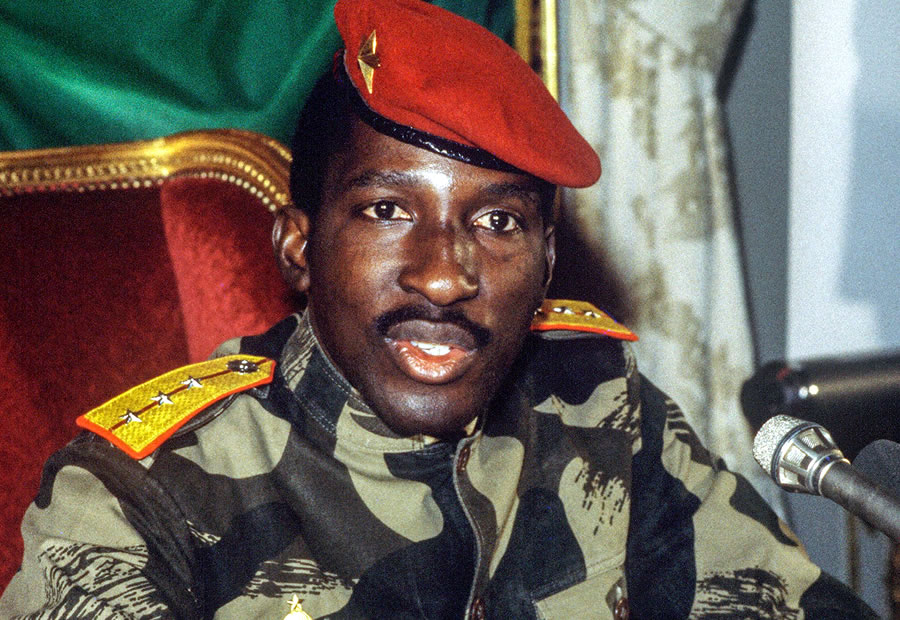
Thomas Sankara: The President Who Turned Leadership Into a Way of Life
Thomas Sankara remains one of the most compelling figures in African political history—not only for the policies he introduced as President of Burkina Faso, but for the way he chose to live while in power. His leadership was defined by a rare consistency between words and personal conduct, where governance was not just spoken, but embodied.
When Sankara assumed office in 1983, he rejected the traditional symbols of political privilege. His salary was reduced to about $450 per month, a figure he believed reflected what an ordinary Burkinabe family could reasonably live on. In doing so, he set a tone that reshaped expectations of public office across the country.
He also dismantled visible markers of elite excess. Government fleets of luxury vehicles were sold off and replaced with modest Renault 5 cars, chosen for their affordability and practicality. Ministerial privileges were scaled back, including restrictions on first-class travel for official duties. Even the tone of government offices changed, as Sankara pushed for simplicity over comfort, arguing that leadership should mirror the realities of the people it serves.
But Sankara’s philosophy extended far beyond symbolism. It became a framework for governance.
He placed strong emphasis on self-reliance and public participation, particularly in rural development. In 1984, his administration launched a national water initiative that led to the construction of thousands of wells and small dams across Burkina Faso. Communities were actively involved in these projects, with villagers participating directly in building infrastructure that improved access to clean water in areas that had long been underserved.
His government also prioritised public health with remarkable urgency. In one of the most ambitious campaigns of its time, an estimated 2.5 million children were vaccinated within a single week against diseases such as measles, yellow fever, and meningitis. The campaign relied heavily on community health workers and mobilisation at the grassroots level, reflecting Sankara’s belief that solutions should be driven from within society rather than imposed from outside.
Even in his private life, Sankara maintained a deliberate simplicity. His children attended public schools, his wife continued her civil service job, and his household remained modest by any political standard. Reports at the time noted that he owned few personal possessions, a reflection of his conviction that leadership should not be accompanied by accumulation.
Sankara’s administration consistently challenged dependency on foreign aid, instead promoting local production, environmental sustainability, and economic discipline. While his policies were not without controversy, they left a lasting imprint on political thought across Africa.
When he was assassinated in 1987 after just four years in office, accounts of his personal belongings underscored the life he had chosen: minimal possessions, no excess wealth, and a lifestyle aligned with the austerity he demanded of his government.
Today, Thomas Sankara is remembered not only as a revolutionary leader, but as a symbol of a different model of governance—one where leadership is measured not by privilege, but by sacrifice; not by rhetoric, but by lived example.
His legacy continues to provoke debate, admiration, and reflection on what it truly means to serve a nation.
Thomas Sankara: The President Who Turned Leadership Into a Way of Life
