

Thomas Sankara: The Revolutionary Leader Betrayed by His Closest Ally
Thomas Sankara: The Revolutionary Leader Betrayed by His Closest Ally

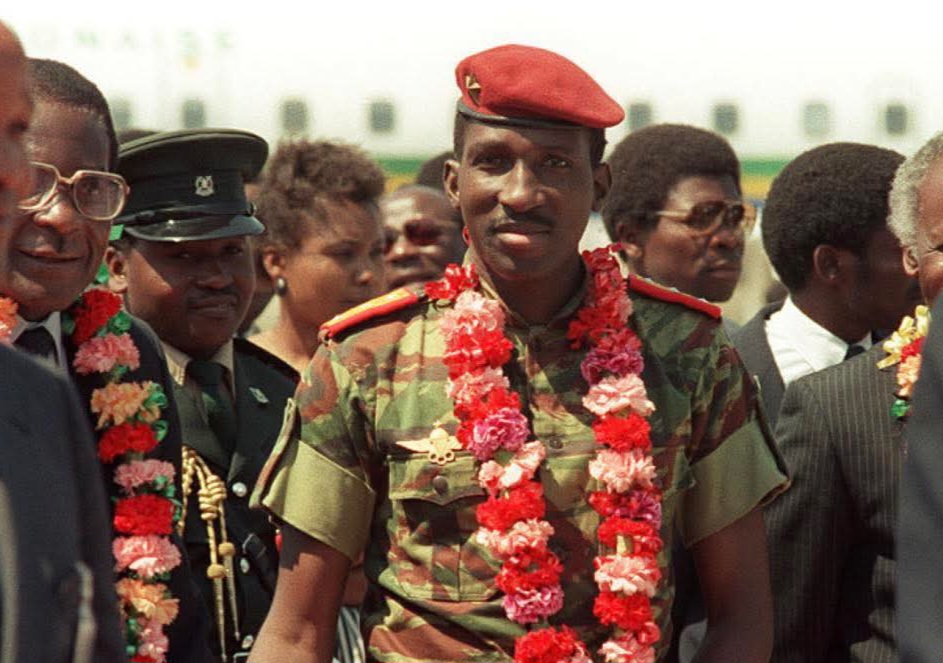
Thomas Sankara: The Revolutionary Leader Betrayed by His Closest Ally
On October 15, 1987, gunfire shattered a meeting inside the headquarters of Burkina Faso’s revolutionary government in Ouagadougou.
Inside the room was Thomas Sankara — the charismatic military captain widely celebrated as one of Africa’s most influential revolutionary leaders.
As armed men stormed the compound, Sankara reportedly turned to his colleagues and calmly said: “It’s me they want. Stay here.”
Moments later, he walked outside to face the attackers.
He was shot dead at the age of 37.
A Revolution Cut Short
The assassination shocked Africa and transformed Sankara into a lasting symbol of anti-colonial resistance, self-reliance, and African sovereignty.
The man accused of orchestrating the coup was Blaise Compaore — Sankara’s closest political ally, longtime friend, and fellow revolutionary.
The two men had once shared power, military ideals, and a vision for transforming Burkina Faso, formerly known as Upper Volta.
But by 1987, political tensions and international pressure had intensified around Sankara’s radical reforms.
Four Years That Changed Burkina Faso
Although Sankara ruled for only four years after taking power in 1983, his administration introduced sweeping reforms that continue to shape his legacy decades later.
Under his leadership:
Millions of children were vaccinated against diseases including measles, yellow fever, and meningitis.
National campaigns planted millions of trees to combat desertification and the spread of the Sahara.
Schools, clinics, and public infrastructure were built in underserved rural communities.
Land redistribution and agricultural reforms aimed to reduce hunger and increase local food production.
Women were appointed to key government positions, while forced marriages and female genital mutilation were publicly condemned.
Sankara also became internationally known for rejecting dependence on foreign financial institutions.
He openly criticized the influence of the International Monetary Fund and Western economic policies in Africa, describing debt as a tool of neo-colonial control.
At an African leaders’ summit, he famously declared that Africa should resist repayment systems that kept the continent economically dependent.
A Lifestyle Unlike Most Leaders
Sankara cultivated an image of modesty and discipline rarely associated with political leadership.
He reduced government spending, sold off luxury state vehicles, and reportedly used one of the country’s cheapest cars as his official vehicle.
Accounts from people close to him described a simple lifestyle with few personal possessions at the time of his death.
To many supporters, Sankara represented a rare example of leadership driven by ideology rather than personal wealth.
The Assassination and Decades of Silence
Following the coup, Sankara’s body was buried secretly in an unmarked grave.
For years, official accounts surrounding his death remained disputed.
A death certificate reportedly listed his cause of death as “natural causes,” despite widespread claims of assassination.
In 2015, authorities exhumed his remains as part of renewed investigations into the killing.
A military court in Burkina Faso later convicted Blaise Compaoré in absentia in 2022 for complicity in the assassination and sentenced him to life imprisonment.
Compaoré, however, has remained outside Burkina Faso and has not served prison time.
France, Foreign Influence, and Continuing Controversy
Sankara’s death has long been surrounded by allegations of foreign involvement and geopolitical interests.
Critics and historians have debated the role of former colonial powers, especially France, in the events surrounding the coup.
Questions about classified French records linked to the assassination continue to generate controversy decades later.
French President Emmanuel Macron pledged in 2017 to open archives connected to Sankara’s death, but debates over transparency and accountability remain ongoing.
“You Cannot Kill Ideas”
Just days before his assassination, Sankara delivered words that would later define his legacy:
“While revolutionaries as individuals can be killed, you cannot kill ideas.”
Nearly four decades later, his image continues to appear across Africa on murals, protest banners, university campuses, and political movements advocating African independence, anti-corruption reforms, and economic self-determination.
In Burkina Faso today, many young people still view Sankara not only as a former president, but as a symbol of what African leadership could become.
