

Who Decides Nigeria’s Future: Abuja or Washington?
In Defence of Lt. Gen. T.Y. Buratai's Call for National Sovereignty

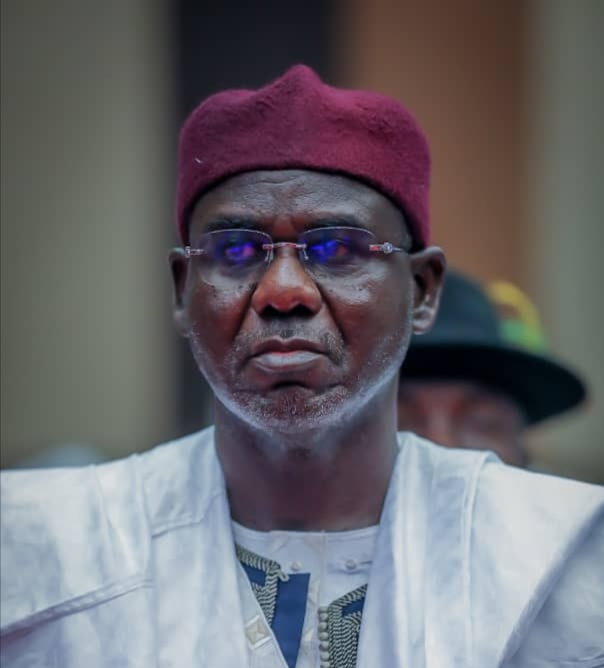
By: MS Abubakar, Ph.D
I read Lt. General Tukur Yusuf Buratai’s intervention, “Nigeria First: A Case for Protecting National Sovereignty and Dignity,” and as a Nigerian scholar, I find myself in total agreement with its central thesis.
This rejoinder is not about defending any individual. It is about defending a principle: that the destiny, reputation, and political future of 250 million Nigerians cannot be outsourced to a foreign courtroom or the selfish interests of politicians who were once associates of the Nigerian leader.
Let that be clear from the outset. My concern here is not partisan. It is national. In international relations, the leader and the nation are inseparable in the eyes of the world. To damage one is to damage the other.
SOVEREIGNTY MEANS NIGERIANS VET OUR LEADERS, NOT WASHINGTON
The most troubling aspect of this entire episode is not the 33-year-old documents. It is the process by which they have become a national issue.
Some will misread this defense of sovereignty as blind support. It is not.
To say “Nigeria First” is to say that the institution of the presidency, the image of the country, and the right of Nigerians to self-determination must be protected from external interference. It is the same principle that made Nigerians, across party lines, close ranks when President Buhari’s health was a subject of foreign speculation. It is the same principle that should make us reject any foreign power dictating who governs us.
This does not mean leaders are above scrutiny. It means scrutiny must happen through the right channels: our National Assembly, our press, our courts, and ultimately, our votes in 2027.
If Nigerians have questions, let us ask them here. Let us debate them here. Let us settle them at the ballot here. That is democracy. That is sovereignty.
THE FAILURE OF DOMESTIC INSTITUTIONS
If our security and intelligence agencies were functioning optimally in 2022, the appropriate background checks, verifications, and due diligence would have been concluded domestically. The Nigerian people, through our own institutions, would have been presented with all the facts and would have made their choice at the ballot.
That this matter has now ended up before the United States District Court for the District of Columbia is itself an indictment. It tells a story of institutional gaps at home.
A sovereign nation does not wait for another country’s judiciary to determine the fitness or reputation of its own President. To allow that to happen is to concede a dangerous precedent: that the political legitimacy of Nigerian leaders can be litigated, leaked, and decided abroad.
What stops another foreign court tomorrow from demanding the private records of a Nigerian Governor, a Senator, or a Chief Justice? If we accept this today, we have no moral ground to object tomorrow.
General Buratai is therefore right. This is not about one man. This is about the principle that Nigerians must determine Nigerian leadership through Nigerian processes.
TIMING, FRAMING, AND NATIONAL IMAGE
We must interrogate the timing and the framing. Allegations from approximately 33 years ago are being weaponized in 2026, on the eve of another electoral cycle.
Can any society grow if it insists on judging every citizen, especially public leaders, solely by the worst chapter of their youth, with no room for the decades of life, service, and governance that followed? More importantly, can any nation develop when its international image is reduced to a single, sensational headline written by foreign media?
We have spent decades as a people fighting stereotypes. We have built a global diaspora of doctors, engineers, tech founders, and artists. We have a Nollywood industry, a growing fintech sector, and young people exporting talent. All of that intangible asset — what scholars call “national brand equity” — can be wiped out in one news cycle with the headline: “Nigerian President linked to…”
The global audience will not read the footnotes. They will not distinguish between alleged civil forfeiture and criminal conviction. They will not ask about due process. They will simply conclude: “Nigeria.”
That is why this is a national issue.
THE ECONOMIC CONSEQUENCES
Let us speak plainly about consequences, because scholarship must be grounded in reality.
Foreign Direct Investment flows to where there is predictability. Development partners commit loans where there is confidence. The Nigerian diaspora sends remittances home because they believe in the future of the country.
A prolonged international scandal centered on the presidency introduces uncertainty. Uncertainty is expensive. Investors pause. Partners review. Rating agencies take note. Compliance departments in London, Dubai, and New York flag “Nigerian” transactions for extra scrutiny.
Who pays that price? Not politicians. It is the student whose scholarship is delayed. It is the SME owner whose foreign contract is cancelled. It is the nurse in the UK whose transfer fees go up.
General Buratai’s warning about collateral damage is therefore not emotional. It is empirical. 250 million people who had nothing to do with events from the 1980s and 1990s will bear the economic and reputational cost.
WHAT NIGERIA MUST DO NOW
Defending sovereignty requires action, not just rhetoric. As a scholar, I propose five immediate steps:
First, Diplomatic Engagement. The Nigerian government must formally communicate to the US government that this matter has implications for bilateral relations and for the principle of non-interference in the internal affairs of sovereign states.
Second, Strengthen Domestic Vetting. The DSS, NIA, and INEC must review their 2022 processes. We need a law that mandates a public, standardized vetting report for all presidential candidates before elections. Never again should we be in this position.
Third, National Consensus. Political leaders across APC, PDP, Labour, and others should issue a joint statement: “We may disagree on policy, but we agree that Nigeria’s reputation will not be decided in a foreign court.”
Fourth, Engage the Diaspora. Our embassies and diaspora organizations must be equipped with factual talking points to counter misinformation and protect Nigerians abroad from stigma.
Fifth, Focus on Governance. The best antidote to any narrative is performance. Insecurity, power, and inflation are the real issues Nigerians will vote on in 2027. Let that be the contest.
A WORD TO THE OPPOSITION
I must address this directly. To opposition parties and political actors:
If your strategy for 2027 is to rely on documents from a foreign court, you have already lost.
Nigerians are not looking for a savior from Washington. They are looking for solutions to hunger, to banditry in the Northwest, to insurgency in the Sahel and Northeast, to unemployment.
Campaign on issues. Unite your ranks. Present a credible alternative. And trust the Nigerian voter. That is how democracy works. Outsourcing political battles abroad is unpatriotic and strategically shortsighted.
CONCLUSION
General Buratai quoted Herbert Hoover: “The glory of the nation rests in the character of her men.” I will add: the dignity of a nation rests in the resolve of her people to defend their right to self-determination.
This is not about the past. It is about the future. It is about whether in 2050, Nigerian children will grow up in a country whose image and politics are controlled from Abuja or from abroad.
The August 28 deadline is a test. Not of one man, but of all of us.
Will we allow a foreign court to write the next chapter of Nigerian history? Or will we insist that Nigerian history is written by Nigerians?
As a scholar and as a citizen, my answer is clear: Nigeria First. Sovereignty First. Nigerians First.
The court in Washington can make its legal decision. But the political and moral decision about Nigeria’s direction belongs to Nigeria alone. And it must remain that way.
