

World Leaders in Their Own Right: How Different Countries Dominate the Global Stage
World Leaders in Their Own Right: How Different Countries Dominate the Global Stage

World Leaders in Their Own Right: How Different Countries Dominate the Global Stage
Every nation has something that sets it apart, but a select group of countries have earned global recognition by leading the world in areas ranging from economic strength and innovation to natural resources, tourism, technology and quality of life.
While no single country dominates every category, these global leaders demonstrate that influence and success can take many different forms.
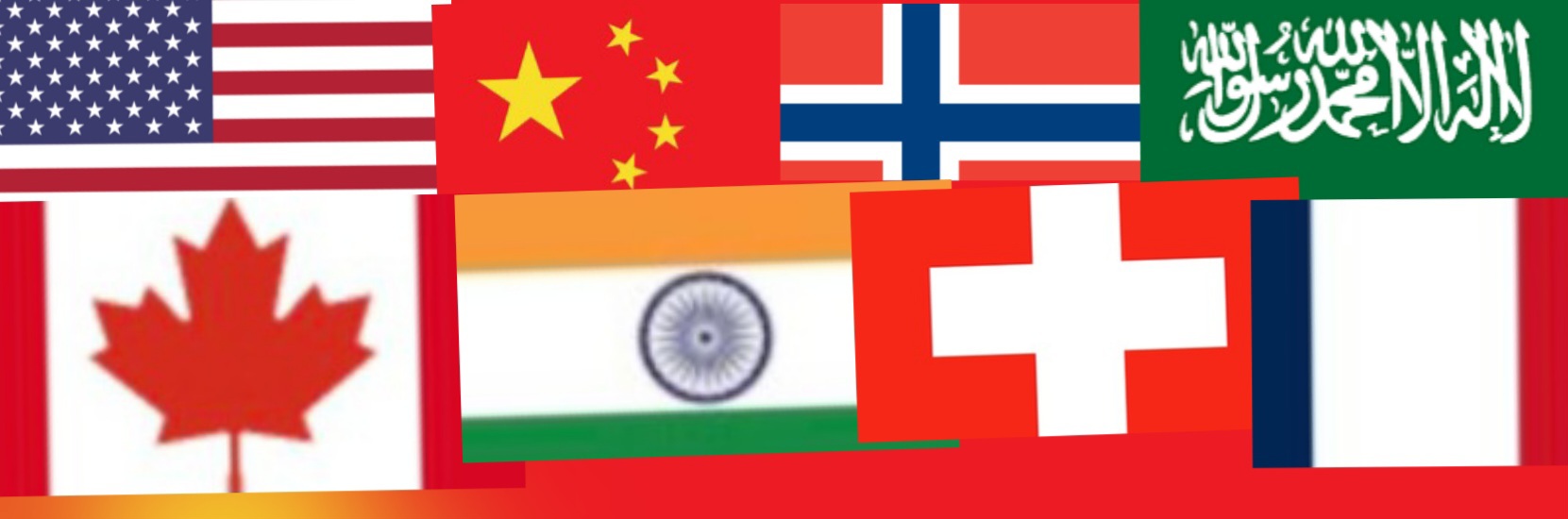
The United States remains the world’s largest economy, with a Gross Domestic Product (GDP) exceeding $30 trillion. Home to global technology giants, financial markets and leading research institutions, the U.S. continues to shape international trade, innovation, entertainment and geopolitics.
India, now the world’s most populous country with more than 1.4 billion people, has become one of the fastest-growing major economies. Its youthful workforce, expanding digital economy and growing manufacturing and technology sectors continue to strengthen its position on the global stage.
Covering more than 17 million square kilometres, Russia remains the world’s largest country by land area, stretching across Europe and Asia. Its vast territory contains enormous reserves of oil, natural gas, minerals, forests and freshwater, making it one of the world’s most resource-rich nations.
Neighbouring Canada holds another remarkable record, boasting the world’s longest coastline at more than 202,000 kilometres, bordering the Atlantic, Pacific and Arctic oceans. The country’s extensive coastline supports fishing, trade, tourism and environmental conservation.
For decades, France has maintained its position as the world’s most visited country, welcoming tens of millions of international tourists annually. Attractions such as the Eiffel Tower, the Louvre Museum, the French Riviera, historic castles and world-renowned cuisine continue to attract visitors from across the globe.
In Northern Europe, Finland has repeatedly been ranked the world’s happiest country. International assessments consistently highlight its high quality of life, strong education system, social trust, healthcare, environmental sustainability and effective public institutions.
Its Nordic neighbour, Iceland, is recognised as the world’s most peaceful country. With exceptionally low crime rates, political stability and strong social cohesion, Iceland has consistently topped global peace rankings.
Switzerland continues to lead global innovation, supported by world-class universities, cutting-edge scientific research, advanced manufacturing, pharmaceuticals, engineering and financial services. Its reputation for precision and technological excellence has made it one of the world’s innovation powerhouses.
In Southeast Asia, Singapore possesses one of the world’s strongest passports, allowing its citizens visa-free or visa-on-arrival access to more countries than almost any other nationality. The city-state is equally recognised for its efficient governance, modern infrastructure and global financial importance.
Tiny Monaco, located along the Mediterranean coast, remains among the richest countries in terms of wealth per capita. Its luxury tourism, banking sector, favourable tax environment and international business community contribute significantly to its prosperity.
Italy holds the distinction of having the highest number of UNESCO World Heritage Sites in the world. From ancient Roman monuments and Renaissance cities to cultural landscapes and archaeological treasures, the country preserves an extraordinary share of humanity’s cultural heritage.
On the industrial front, China remains the world’s manufacturing powerhouse, producing everything from electronics and automobiles to machinery, textiles and consumer goods. Often described as the “factory of the world,” China’s manufacturing sector plays a central role in global supply chains.
South Korea leads the world in robot density, with more industrial robots operating per manufacturing worker than any other country. Heavy investment in automation has strengthened its globally competitive automotive, electronics and semiconductor industries.
South America is represented by Brazil, widely recognised as the world’s most biodiverse country. Home to the Amazon Rainforest—the largest tropical rainforest on Earth—Brazil contains millions of plant and animal species, many found nowhere else.
Meanwhile, Norway manages the world’s largest sovereign wealth fund, officially known as the Government Pension Fund Global. Built primarily from the country’s oil and gas revenues, the fund is valued at well over US$1 trillion and invests in thousands of companies worldwide to secure wealth for future generations.
In the energy sector, Saudi Arabia remains one of the world’s largest crude oil exporters. As a leading member of OPEC, the Kingdom continues to play a vital role in global energy markets while simultaneously pursuing economic diversification through its Vision 2030 development programme.
Although these countries lead in different areas, their achievements illustrate that global leadership cannot be measured by a single indicator alone. Economic strength, innovation, natural resources, tourism, education, environmental stewardship, technology and cultural heritage all contribute to a nation’s global influence.
From America’s economic might and India’s demographic advantage to Finland’s quality of life, Brazil’s biodiversity and China’s manufacturing capacity, each country demonstrates a unique pathway to international relevance.
Together, these examples show that every nation has the potential to shape the world—not necessarily by excelling in everything, but by building on its greatest strengths while investing in sustainable growth, innovation and human development.
World Leaders in Their Own Right: How Different Countries Dominate the Global Stage
