

Atiku Was Never a Spare-Tyre Vice President: Revisiting the Legacy of Nigeria’s Most Powerful Vice President
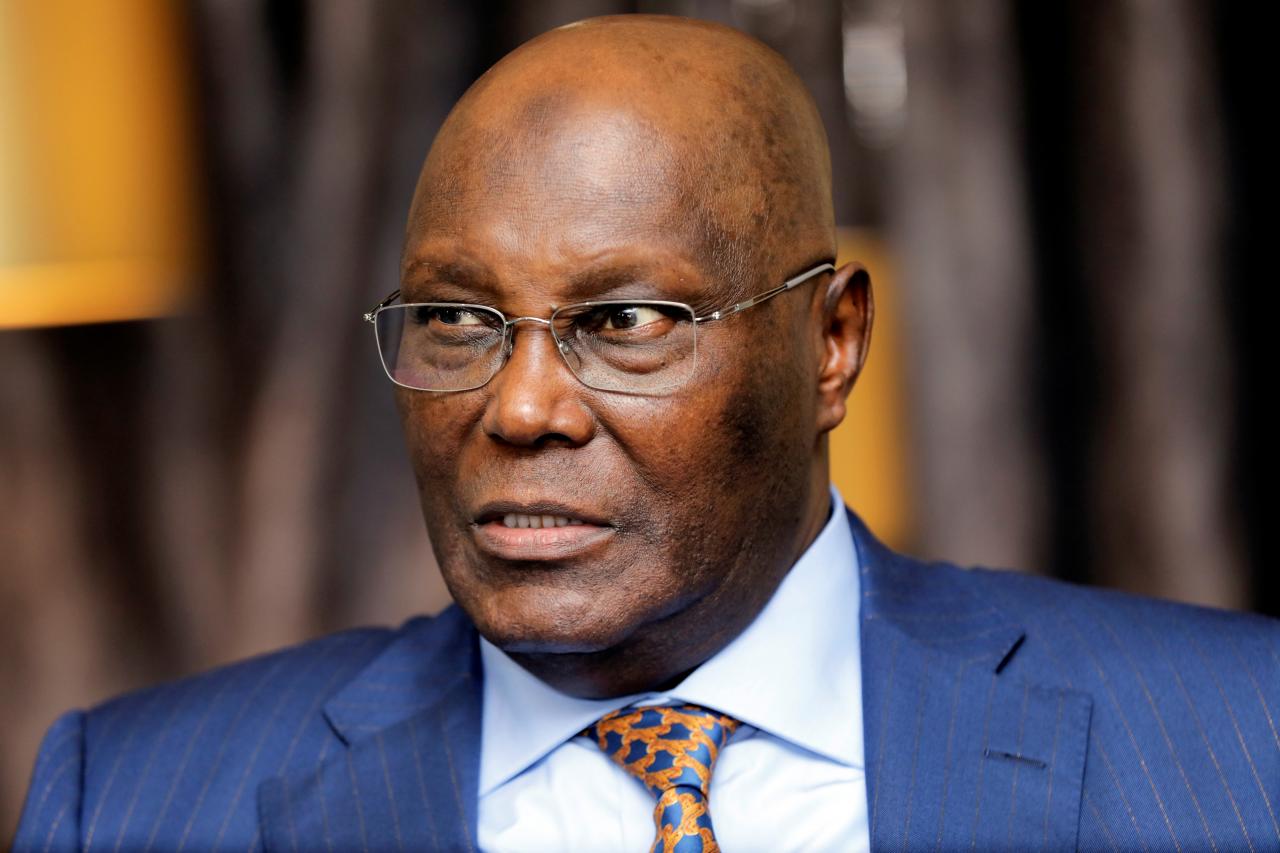
Atiku Was Never a Spare-Tyre Vice President: Revisiting the Legacy of Nigeria’s Most Powerful Vice President
By Jerry Adesewo
The recent political realignments within the opposition camp, particularly reports linking former Vice President Atiku Abubakar, former Rivers State Governor Rotimi Amaechi, and the African Democratic Congress (ADC) to discussions about a new presidential governance model, have revived an old debate about the role of the vice president in Nigeria’s democracy.
Interestingly, the renewed conversation about the vice presidency was triggered by reports that Atiku intends to adopt a more collaborative governing model should he return to power. According to a source quoted in the report, originally published by The Guardian Newspaper, the former vice president believes Nigeria’s constitutional arrangement leaves the office of the vice president largely dependent on the disposition of the president, unlike the United States, where specific responsibilities are more clearly defined.
READ ALSO: Dr. Amina Buba Emerges as Nigeria’s Youngest Female Urologic Surgeon Fellow
Drawing from his own experience during the latter years of the Obasanjo administration, when relations between both men deteriorated sharply, Atiku is said to be considering a partnership model that would assign substantial responsibilities to his running mate, Rotimi Amaechi.
The source explained that Atiku views his difficult experience under Obasanjo as a lesson for future governance. “He wants to be that president that acknowledges that the office is one big room with two big doors,” the source was quoted as saying.
“This is why he said he wants to show by example that the vice president should not be either a spare tyre or a tea-server.” While the statement has re-ignited the debate about the role of the vice presidency in Nigeria, it has also led to a re-examination of Atiku’s own record in office that suggests he was anything but a spare tyre during his eight years in Aso Rock.
The irony, however, is that Nigeria has had a vice presidency that was anything but ceremonial. It happened between 1999 and 2007 under President Olusegun Obasanjo, and the man occupying that office was Atiku Abubakar himself.
Whether one agrees with his politics or not, history demands accuracy. Atiku was not a spare tyre. He was arguably the most politically powerful vice president in Nigeria’s democratic history and one of the most influential deputy heads of government in contemporary Africa.
When Nigeria returned to democratic rule in 1999, the country faced enormous challenges. Years of military rule had weakened institutions, the economy required urgent reforms, and investor confidence was low. Rather than confining his deputy to protocol duties, President Obasanjo, while engaging with the international community, entrusted Atiku with some of the most strategic responsibilities in government.
As Vice President, Atiku chaired the National Economic Council (NEC), bringing together state governors and economic managers to coordinate development policies. More significantly, he chaired the National Council on Privatisation (NCP), which supervised one of the most ambitious economic reform programmes in Nigeria’s history.
The privatization of state-owned enterprises, telecommunications liberalization, investment reforms, and broader economic restructuring all took place under a framework in which Atiku played a central role. In many respects, he functioned as the administration’s chief economic coordinator and political bridge between the Presidency, the states, and the ruling People’s Democratic Party (PDP).
This was not the role of a ceremonial deputy. It was the role of a man exercising real authority.
Infact, some political observers argue that the seeds of the eventual breakdown between Obasanjo and Atiku were planted much earlier than the famous Third Term controversy.
Over the years, accounts have emerged suggesting that Atiku was encouraged by influential political figures to challenge Obasanjo for the PDP presidential ticket ahead of the 2003 elections. While the full details remain contested and difficult to independently verify, the recurring narrative itself reveals an important reality: Atiku was perceived as politically formidable enough to challenge a sitting president within his own party.
That perception alone distinguishes him from many vice presidents before and after him. A powerless deputy is not viewed as a potential rival. A spare tyre does not command enough influence to unsettle an incumbent president.
If the 2003 succession whispers revealed Atiku’s political weight, the Third Term saga exposed its full extent.
When efforts emerged to amend the Constitution and permit President Obasanjo to seek another term beyond 2007, Atiku became the most prominent internal opponent of the project. The disagreement transformed what had once been one of Nigeria’s strongest presidential partnerships into one of its fiercest political rivalries.
The vice president openly resisted the initiative, mobilized allies across the political spectrum, and emerged as a rallying point for those opposed to constitutional amendment. When suspended by the President, Atiku took his case to the court and fought it up to the Supreme Court.
Regardless of where one stands on the third term debate, one fact remains undeniable: few vice presidents in the world have openly confronted a sitting president with such intensity while remaining a central figure in national politics.
The confrontation demonstrated just how much political capital Atiku had accumulated. His influence was not merely administrative. It was institutional, economic, regional, and partisan. That is why any attempt to describe him as a spare tyre fails the test of history.
The comparison with Professor Yemi Osinbajo is instructive. If Atiku was Nigeria’s most politically powerful vice president, Osinbajo was perhaps its most administratively influential since the return to democracy.
Under President Muhammadu Buhari, Osinbajo chaired the National Economic Council, led the Economic Sustainability Plan during the COVID-19 pandemic, coordinated major economic interventions, and repeatedly served as Acting President during Buhari’s medical absences abroad.
During those periods, he demonstrated decisiveness and competence, earning widespread commendation from both supporters and critics of the administration.
Yet there was a fundamental difference between the two men. Osinbajo’s influence was largely technocratic and policy-driven. Atiku’s influence combined executive authority with independent political power.
Before becoming vice president, Atiku had already won an election as Governor of Adamawa State. He possessed a nationwide political network, deep roots within the PDP, extensive relationships across the National Assembly, and considerable influence among northern political elites.
Consequently, his authority extended beyond the powers formally assigned to him by the Constitution. In many ways, he became a co-architect of the Fourth Republic’s early political and economic direction. This is why current conversations about redesigning the vice presidency should not proceed as though Nigeria lacks precedent.
Long before Atiku and Osinbajo, Nigeria had witnessed another remarkably influential number two in the person of the late Major General Tunde Idiagbon, who served as Chief of Staff, Supreme Headquarters, under Major General Muhammadu Buhari during the military administration of 1984–1985.
Although the office was not constitutionally equivalent to that of a vice president, Idiagbon was widely regarded as the regime’s principal enforcer and chief policy driver. He spearheaded the famous War Against Indiscipline (WAI), coordinated economic austerity measures, supervised anti-corruption campaigns, and exercised considerable authority over the machinery of government.
Indeed, many Nigerians at the time viewed the Buhari-Idiagbon administration as a partnership in which the Head of State provided the overarching leadership while Idiagbon drove implementation. His tenure remains one of the strongest examples in Nigerian history of a deputy wielding substantial executive influence rather than merely occupying a ceremonial position.
The country has already witnessed a model in which a vice president exercised substantial authority, shaped national policy, coordinated economic reforms, and influenced political outcomes. Whether that arrangement succeeded or failed is a matter for debate. What is not debatable is that it existed.
As opposition politicians discuss governance models ahead of the 2027 elections, they would do well to remember that the strongest argument for an empowered vice presidency may not lie in future proposals. It lies in Nigeria’s recent past.
History records many vice presidents. A few occupied the office. A handful exercised power. His Excellency, Alhaji Atiku Abubakar, GCON, belongs firmly in the latter category.
Whatever verdict history ultimately delivers on his presidential ambitions, the record is already settled on one point: He was never a spare tyre.