


How Army’s Fight Against Boko Haram Restored Hope in Northeast – Buratai
By Matthew Eloyi
Former Chief of Army Staff, Lt.-Gen. Tukur Yusuf Buratai (rtd.), has said the transformation of Nigeria’s military during his tenure went beyond battlefield operations, stressing that the fight against terrorism required institutional reforms, humanitarian intervention, international partnerships and restoration of communities.
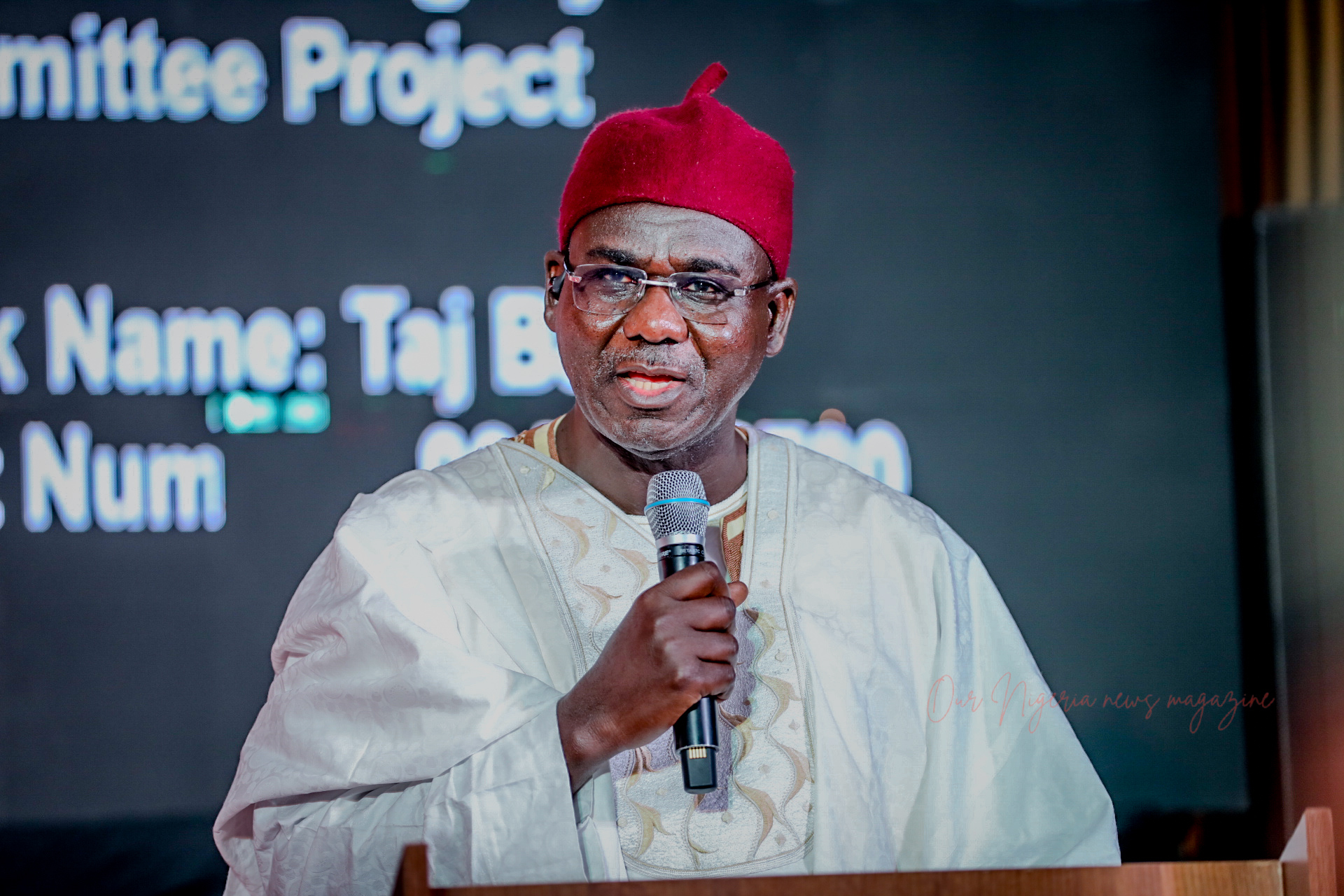
Buratai stated this at the public presentation of Military Leadership in Action: The Buratai Era, authored by Dr. M.S. Abubakar, where he reflected on his tenure as Chief of Army Staff from 2015 to 2021.
He said he assumed office in July 2015 at a time when Boko Haram had seized significant territory, displaced communities and weakened public confidence in the country’s security institutions.
According to him, the challenge was not simply to recover territory but to build military institutions capable of responding to evolving security threats.
He said his administration therefore introduced institutional reforms, revised military doctrine, expanded training and logistics capabilities, established new formations and created the Special Forces Command.
Buratai said the reforms also included efforts to strengthen civil-military relations and ensure that military operations were conducted within the law and with respect for human dignity.
He stressed that security was not exclusively a military responsibility, noting that the fight against terrorism and insurgency required cooperation among government institutions, communities, traditional and religious leaders and international partners.
“The fight against terrorism and insurgency cannot be won by force alone. It must be accompanied by development, justice, and the restoration of hope,” he said.
The former Army chief said one of the less-discussed consequences of the military’s counter-insurgency campaign was the reopening of humanitarian space in the North-East.
He recalled that at the height of the Boko Haram insurgency, insecurity had forced humanitarian organisations to withdraw from affected communities, leaving displaced populations without adequate assistance.
According to him, the restoration of security following the military’s operations created conditions that enabled humanitarian organisations to return and communities to begin rebuilding their lives.
Buratai said the return of internally displaced persons to their ancestral homes, reopening of markets and schools, restoration of roads and essential services were more important indicators of success than the mere number of territories reclaimed.
He recalled visiting Buni Yadi in Yobe State on the day he assumed office and being confronted with the extent of the destruction caused by the insurgency.
He said the once-busy community had been deserted, with houses deteriorating and residents displaced to other locations.
“That was how we started reclaiming one community and the other,” he said, adding that Buni Yadi and other communities subsequently witnessed the return of residents.
Buratai also highlighted what he described as a transformation in Nigeria’s international security partnerships during his tenure.
He said the success of Nigerian forces against Boko Haram helped change international perceptions about the country’s capacity to confront the insurgency.
According to him, countries including the United States, United Kingdom, France and Germany subsequently increased intelligence, training and technical support to Nigeria.
He said the cooperation included the establishment of an intelligence fusion centre, expanded counter-insurgency training, intelligence support, improvised explosive device disposal and human-rights training.
Buratai said Nigeria also integrated the international assistance into its own military strategy with emphasis on maintenance and institutional ownership.
He further highlighted the role of spiritual and moral support in strengthening the resilience of troops and communities, saying the military engaged Christian and Muslim leaders to counter extremist narratives and promote tolerance.
He said countering the fear generated by Boko Haram propaganda was important to restoring confidence among soldiers and civilians.
The former Army chief also pointed to regional cooperation through the Multinational Joint Task Force involving Nigeria, Cameroon, Chad, Niger and Benin Republic.
He said the arrangement was deliberately designed to address the cross-border nature of the insurgency and deny terrorists safe havens.
Buratai said his administration also sought to rebuild public trust through human-rights training, complaints mechanisms and community engagement.
“The population is the centre of gravity, not in the background,” he said.
He commended his successors for sustaining and improving some of the reforms initiated during his tenure, saying military transformation must be continuous.
Buratai also expressed appreciation to the author of the book for documenting the period, noting that institutional experiences should be preserved so that security professionals, policymakers, researchers and students can examine what worked, what did not and the lessons that should endure.
He said the book was not merely about his personal achievements, but an opportunity to examine Nigeria’s institutional journey during a critical period in the country’s security history.
