

You Need to Know About Masjid al-Nabawi: The History of the Prophet’s SAW Mosque
You Need to Know About Masjid al-Nabawi: The History of the Prophet’s SAW Mosque


You Need to Know About Masjid al-Nabawi: The History of the Prophet’s SAW Mosque
Masjid al-Nabawi, also known as the Prophet’s Mosque, is one of the most sacred and historically significant sites in Islam. Located in Madinah, Saudi Arabia, the mosque was established by Prophet Muhammad SAW following his migration from Makkah to Madinah in 622 CE, corresponding to the first year of the Islamic calendar.
For more than 1,400 years, Masjid al-Nabawi has remained a major centre of Islamic worship, scholarship and history. It is regarded as the second-holiest mosque in Islam after Masjid al-Haram in Makkah.
Founded by Prophet Muhammad SAW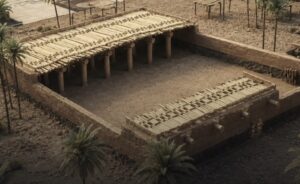
After arriving in Madinah during the Hijrah, Prophet Muhammad established the mosque at the centre of the new Muslim community.
Construction began in the first year after the migration. The Prophet himself participated in the construction alongside his Companions.
The original mosque was simple in design. Its walls were built from mud bricks and stones, while palm-tree trunks served as supporting columns. The roof was constructed from palm branches and other locally available materials.
Despite its simplicity, the mosque quickly became the heart of the growing Muslim community. It served not only as a place of prayer but also as a centre for teaching, consultation, community affairs and the administration of the early Muslim state.
Expansions during the Prophet’s lifetime and early Islamic period
As the Muslim population of Madinah increased, the mosque was expanded during the lifetime of Prophet Muhammad SAW.
The mosque was subsequently enlarged during the caliphates of Umar ibn al-Khattab and Uthman ibn Affan.
A major reconstruction took place during the Umayyad period under Caliph al-Walid ibn Abd al-Malik between approximately 706 and 709 CE. The expansion incorporated the Prophet’s burial chamber into the larger mosque complex and introduced significant architectural developments, including minarets.
Over the centuries, the mosque continued to undergo expansions and renovations under different Muslim dynasties, including the Abbasids, Mamluks and Ottomans.
The Sacred Chamber and the burial place of Prophet Muhammad SAW
One of the most revered areas of Masjid al-Nabawi is the Sacred Chamber.
The chamber was originally the home of Aisha, one of the wives of Prophet Muhammad. It was where the Prophet spent his final days and where he died in 632 CE, corresponding to 11 AH.
Prophet Muhammad SAW was buried in the same chamber. Abu Bakr, his close companion and first caliph, was later buried beside him, followed by Umar ibn al-Khattab.
The chamber was originally separate from the mosque but became enclosed within the mosque following later expansions.
Al-Rawdah: The Garden Between the House and the Pulpit
Another highly revered area of Masjid al-Nabawi is Al-Rawdah, traditionally described as being located between the Prophet’s house and his pulpit, known as the Minbar.
Prophet Muhammad SAW said:
“Between my house and my pulpit is a garden from the gardens of Paradise.”
For Muslims visiting Madinah, praying in Al-Rawdah is considered a deeply significant spiritual experience.
The Green Dome
The famous Green Dome is one of the most recognisable landmarks associated with Masjid al-Nabawi. However, the dome was not part of the original mosque built by Prophet Muhammad SAW.
A dome was first constructed above the Sacred Chamber in 1279 CE during the Mamluk period. It underwent several changes over the centuries and was eventually painted green in 1837 CE.
The Green Dome has since become an internationally recognised symbol of Madinah and the Prophet’s Mosque.
The Reward of Prayer in Masjid al-Nabawi
The special status of Masjid al-Nabawi is also established in the sayings of Prophet Muhammad SAW.
According to authentic Hadith recorded in Sahih al-Bukhari and Sahih Muslim, the Prophet said that one prayer in his mosque is better than one thousand prayers in any other mosque, except the Sacred Mosque in Makkah.
This is one of the reasons millions of Muslims travel to Madinah each year to worship at Masjid al-Nabawi.
Ottoman Contributions
The Ottoman Empire carried out several important restoration and expansion projects at Masjid al-Nabawi.
One of the most significant was the major expansion commissioned by Ottoman Sultan Abdulmecid I between 1848 and 1860.
The Ottoman period left a distinctive architectural legacy within the mosque, including detailed decoration, calligraphy and craftsmanship that remain part of its historical character.
Modern Saudi Expansions

The mosque has undergone enormous expansion during the modern Saudi era to accommodate the growing number of worshippers visiting Madinah.
The first major Saudi expansion began in the early 1950s and was completed in 1955. It substantially increased the mosque’s capacity and introduced modern facilities.
Another major expansion began in the 1980s and was completed in the 1990s, dramatically increasing the mosque’s area and capacity.
Further expansion and development projects followed in the 21st century, providing larger prayer areas, extensive courtyards, modern cooling systems, improved sanitation facilities, sophisticated lighting and advanced crowd-management infrastructure.
The huge retractable umbrellas covering the mosque’s courtyards have also become one of its distinctive modern features.
A Blend of Islamic Heritage and Modern Architecture
Today’s Masjid al-Nabawi combines centuries-old Islamic architectural traditions with modern engineering.
The mosque features:
The Green Dome
The Sacred Chamber
Al-Rawdah
The Prophet’s Minbar
Historic and modern minarets
Extensive Qur’anic calligraphy
Islamic architectural decoration
Large prayer halls
Expansive courtyards
Retractable umbrellas
Modern air-conditioning and ventilation systems
Advanced lighting and crowd-management facilities
The result is a vast religious complex capable of receiving millions of worshippers while preserving important elements of its historic identity.
Masjid al-Nabawi Through More Than 1,400 Years
The history of Masjid al-Nabawi can be traced through several important milestones:
622 CE (1 AH): Prophet Muhammad SAW arrives in Madinah and establishes the mosque.
Around 628 CE (7 AH): The mosque is expanded during the Prophet’s lifetime.
638 CE (17 AH): Expansion takes place during the caliphate of Umar ibn al-Khattab.
649–650 CE (29–30 AH): Further expansion is undertaken during the caliphate of Uthman ibn Affan.
706–709 CE: Major reconstruction takes place during the reign of Umayyad Caliph al-Walid ibn Abd al-Malik.
1279 CE (678 AH): A dome is constructed above the Sacred Chamber during the Mamluk period.
1837 CE (1253 AH): The dome is painted green.
1848–1860 CE: A major Ottoman expansion is carried out under Sultan Abdulmecid I.
1950s: The first major Saudi-era expansion begins.
1985–1994: Another major expansion dramatically increases the mosque’s capacity.
21st century: Further expansion, technological upgrades and visitor-management projects transform the mosque into one of the world’s largest and most advanced religious complexes.
More Than a Mosque
Masjid al-Nabawi is more than an architectural landmark. It is a central part of Islamic history.
It was the place where Prophet Muhammad led prayers, taught his Companions, addressed community affairs and guided the early Muslim community.
From its humble beginnings as a simple structure made largely from mud bricks and palm materials, the mosque has developed over fourteen centuries into a vast complex visited by millions of Muslims from around the world.
Yet its historical importance remains rooted in the same place where Prophet Muhammad SAW established the mosque after arriving in Madinah.
Masjid al-Nabawi stands today as a living connection between Muslims around the world and the history, teachings and legacy of Prophet Muhammad SAW and the early Muslim community in Madinah.
You Need to Know About Masjid al-Nabawi: The History of the Prophet’s SAW Mosque
