

The Economic Crucible: Why Nigeria’s 2027 Election Will Be Defined by the Kitchen, Not the Dashboard

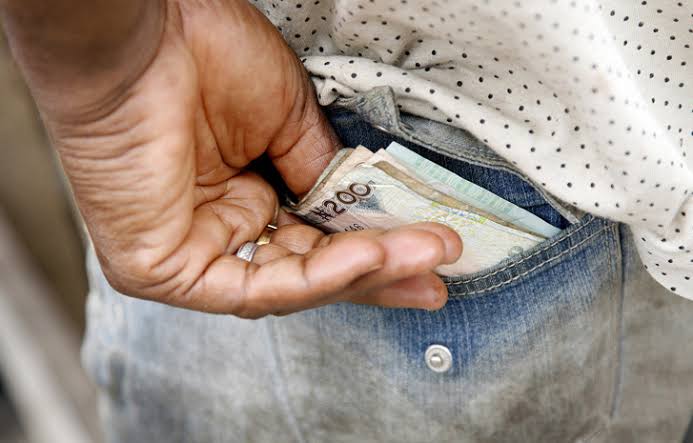
The Economic Crucible: Why Nigeria’s 2027 Election Will Be Defined by the Kitchen, Not the Dashboard
By Ameh Abraham
Nigeria’s path to the 2027 general elections is defined by a jarring macroeconomic paradox. State-level indicators project a narrative of robust recovery, with external reserves hitting a two-decade peak of $50.11 billion and the Nigerian Exchange (NGX) consistently posting gains led by the banking sector. Yet, this high-level prosperity stands in stark contrast to the grueling microeconomic reality facing the average citizen, where the true cost of survival measured at the kitchen table rather than on a financial dashboard reveals a deepening, systemic precarity that will likely define the upcoming political discourse.
READ ALSO: Army, GTBank Deepen Partnership to Strengthen Troop Welfare, Financial Services
To analyze the 2027 electoral equation without centering the economic dimension is not merely an oversight; it is an analytical failure. The upcoming elections will not be settled solely by the mechanics of the Bimodal Voter Accreditation System (BVAS) or the legal maneuverings within party conventions alone. They will be settled in the marketplaces, at fuel stations, and within the households of the 79% of Nigerians now living in poverty. We are witnessing a “Reform Paradox,” where official success metrics are increasingly detached from the material reality of the electorate.
The Macro-Micro Chasm
Nigeria is currently trapped in a paradox where macroeconomic indicators suggest a recovering state, while the microeconomic foundation is eroding. According to recent data, poverty rates have surged from 40% in 2019 to an alarming 79% by mid-2026. This is not merely a statistical fluctuation; it is a fundamental shift in the nation’s social composition.
The disconnect between the government’s narrative that reforms are “yielding results” and the citizen’s reality, characterized by petrol prices exceeding ₦1,400 per litre and food inflation acting as a persistent tax on the poor—is politically explosive. When the International Monetary Fund (IMF) projects an expansion of 4.1% in the economy, yet simultaneously warns that rising prices will deepen poverty, it highlights a structural failure in social protection. The state is growing, but the citizens are shrinking. For an electorate, this creates a volatile environment where the traditional promises of “dividends of democracy” are viewed with profound skepticism.
The Investment Myth and the Currency Crisis
A central pillar of the current administration’s foreign policy and economic strategy has been “private jet diplomacy”—a series of high-profile bilateral trips aimed at attracting Foreign Direct Investment (FDI). Yet, the data suggests that this outreach is yet to bridge the gap between diplomatic activity and domestic prosperity.
While the total stock of FDI stands at approximately $73.37 billion, the trend is increasingly concerning. We are seeing a pattern of divestment from major multinational entities, companies like Shell, Procter & Gamble, and Unilever Nigeria have either exited or significantly reduced their footprints after decades of operation. This is not merely a matter of corporate strategy; it is a vote of no-confidence in the domestic business environment. When high-level diplomatic visits do not stem the tide of divestment, the narrative of a “business-friendly Nigeria” begins to fray. The resulting currency volatility—with the naira suffering persistent pressure on the parallel market, acts as a multiplier for inflation, further eroding the purchasing power of the average voter.
The Political Economy of Desperation
Perhaps the most critical electoral implication of this economic crisis is the vulnerability it creates. An electorate suffering from chronic economic desperation is, by definition, an unpredictable electorate. As political scientists have long argued, poverty does not necessarily lead to revolution; often, it leads to a transactional approach to politics.
When 35 million Nigerians face acute food insecurity, the “electoral equation” changes from one of policy preference to one of immediate survival. The Action Alliance and various civil society groups have warned that the skyrocketing costs of fuel, food, and medicine have pushed millions deeper into poverty. In such a climate, voters are increasingly susceptible to vote-buying networks that exploit their destitution. If the 2027 election cycle is dominated by candidates who treat politics as an investment with a required “return,” and voters who are forced to treat their ballot as a commodity for survival, the result will be a hollowed-out democracy.
The Judicialization of Economic Struggle
The frequency with which electoral and policy disputes are funneled into the courtroom is a direct symptom of this underlying economic instability. When political parties lack the internal discipline to manage their affairs, and when economic grievances are not addressed through policy, the judiciary becomes the ultimate arbiter of all political life.
However, legal institutions cannot resolve economic crises. The over-reliance on judicial intervention to solve disputes over candidate eligibility or election results creates a feedback loop of instability. It suggests that the political class is more focused on “lawyering” their way into power than on formulating a cohesive economic roadmap to pull the country out of its current stagnation. This pushes long-term priorities—such as reforming the energy sector, enhancing local productivity, and addressing the infrastructure deficit—to the margins of the political discourse.
A Roadmap for Economic Integrity
To ensure that 2027 serves as a watershed moment for Nigeria, we must pivot from election-centric thinking to a structural focus on the economy. The path forward requires:
Radical Transparency in Social Investment: We must move beyond the rhetoric of “social investment programmes.” We need independent, public-facing audits of where these funds are going and a measurable assessment of their impact on the poorest 79% of the population.
Addressing the “Reform Paradox”: The government must reconcile its macroeconomic data with the microeconomic reality. Policy must shift from prioritizing headline figures—like reserve accumulation—to stabilizing the household economy (food prices and energy costs).
Party Finance Reform: We must break the nexus between “politics as business” and economic corruption. So long as the cost of nomination forms remains prohibitive, the political system will continue to select candidates based on their ability to command vast capital, rather than their ability to manage the economy.
Prioritizing Productive Sectors: Instead of reactive subsidies, the state must incentivize local production in agriculture and manufacturing—sectors that provide mass employment—to counteract the inflationary pressure of imports.
Conclusion
The 2027 general elections will not be saved by the sophistication of our voting machines or the resilience of our digital portals. They will be saved, or lost, in the kitchen. The real “canary in the coal mine” for the upcoming cycle is not the ballot box; it is the silent, disenfranchised citizen who finds the price of a loaf of bread to be a more urgent policy concern than the campaign rhetoric of the political elite. If we continue to ignore the economic dimension—if we continue to prioritize the dashboard of indices over the reality of the stomach—we will remain caught in a cycle of comatose development, where the election is merely a periodic ritual rather than a catalyst for the renewal of the Nigerian state.
